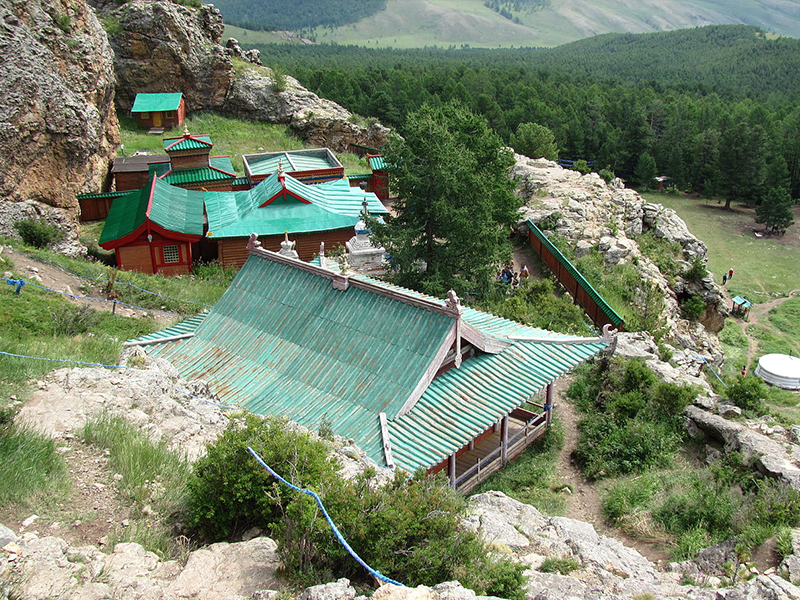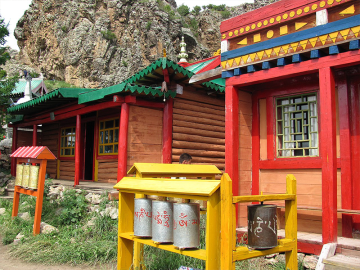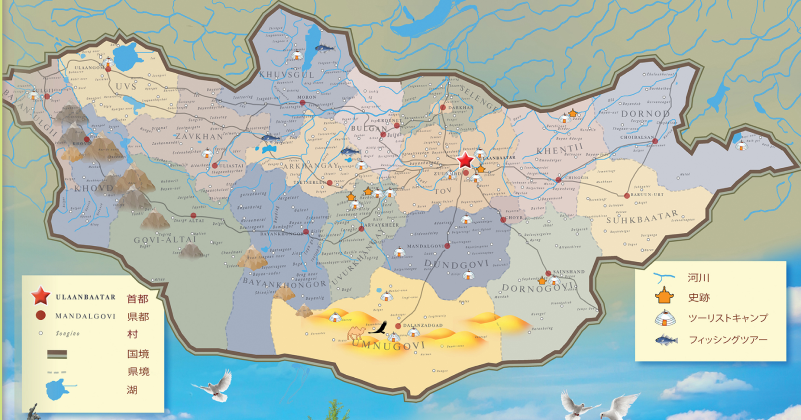
Tövkhön Monastery is one of Mongolia’s most remarkable spiritual and cultural sites, hidden high in the forested mountains of Övörkhangai Province. The monastery was established in the 17th century by Öndör Gegeen Zanabazar, Mongolia’s first Jebtsundamba Khutuktu, a prominent Buddhist spiritual leader, philosopher, sculptor, and artist. He used Tövkhön as a secluded retreat for meditation, prayer, study, and artistic creation.
Set among granite cliffs, pine and larch forests, and rugged mountain terrain, the monastery is reached by a scenic hike through the surrounding landscape. Along the way, visitors can encounter striking rock formations and sacred sites associated with Zanabazar and the monastery’s spiritual traditions. The complex includes historic temples, meditation chambers, caves, and small sanctuaries built into the mountainside.
Tövkhön Monastery is particularly renowned for its tranquil setting. Far from major settlements, the site offers panoramic views across the surrounding forests and mountains, creating an atmosphere of solitude and contemplation. Its combination of Buddhist heritage, Zanabazar’s legacy, sacred natural landscapes, and traditional architecture makes Tövkhön an important destination for travelers interested in Mongolia’s history, culture, spirituality, and nature.