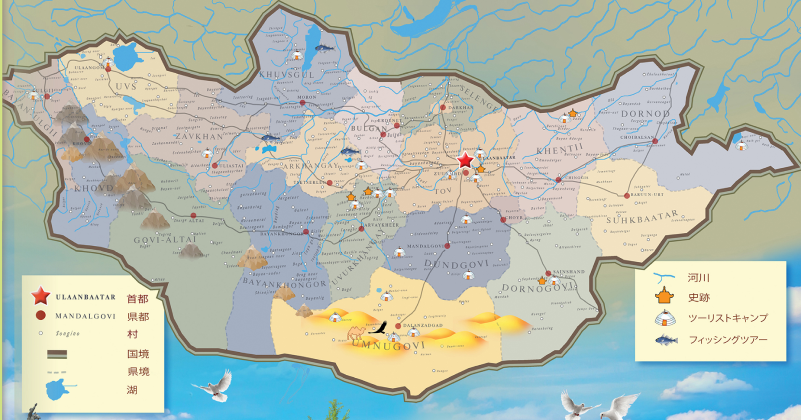
Standing beside the ancient ruins of Karakorum, Erdene Zuu Monastery is one of Mongolia’s most treasured historical and spiritual landmarks. Founded in 1586 by Abtai Sain Khan, it was established on the site of the former capital of the Mongol Empire and became a major center of Buddhist culture in Mongolia.
The monastery is surrounded by an impressive stone wall lined with stupas, creating one of the most recognizable Buddhist landscapes in the country. Its architecture reflects a unique blend of Mongolian, Tibetan, and Central Asian traditions, while the layout of the complex also preserves elements of traditional Mongolian nomadic culture.
For centuries, Erdene Zuu stood as an important center of religious learning and artistic expression. Although much of the monastery was destroyed during the religious purges of the 1930s, several temples and the surrounding walls survived. Today, the monastery has once again become an active place of Buddhist practice as well as a cultural heritage site.
Walking through its peaceful courtyards, visitors can admire historic temples, intricate religious artwork, ancient stupas, and the enduring atmosphere of one of Mongolia’s most significant spiritual centers.
As part of the Orkhon Valley Cultural Landscape, Erdene Zuu offers a remarkable connection between Mongolia’s Buddhist heritage and the legacy of the Mongol Empire. A visit here is a journey through centuries of history, faith, architecture, and Mongolian cultural tradition.